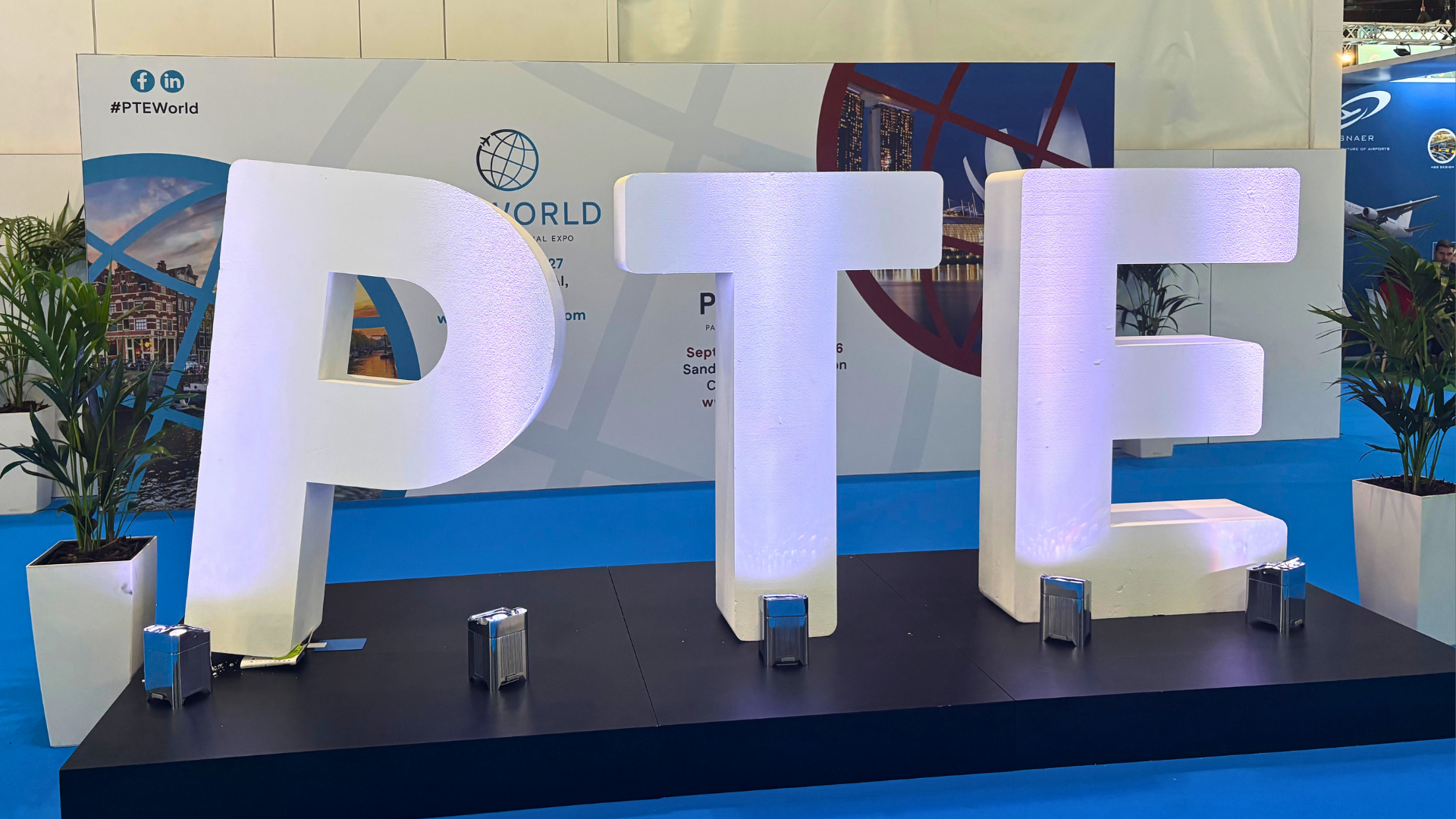
PTE World 2026 did not disappoint. Over three days at ExCeL London, more than 11,000 aviation professionals came together to explore the technologies, strategies, and infrastructure shaping the next era of air travel. The energy was palpable, the conversations sharp, and the ambition on full display.
And yet, as we walked the halls and sat through sessions, one glaring gap kept surfacing: where was the conversation about people?
Big ambitions, big builds, big questions
The airport industry is firmly focused on growth. Sustainability-led infrastructure, terminal expansions, biometric processing, and next-generation passenger experiences dominated the exhibition floor and the conference program. Given where demand is heading, that focus makes sense. According to Airports Council International (ACI) World, global passenger traffic is forecast to reach 10.2 billion in 2026, a 3.9% year-on-year increase, with long-term projections pointing to a doubling of traffic by the mid-2040s.
All of this is encouraging, and necessary. But it also raises a question that PTE World’s formal program largely left unanswered: who is going to deliver on all of this?
The workforce conversation that happened off-stage
While workforce topics were notably absent from the conference program and exhibition stands, they were everywhere in one-on-one conversations. Between sessions, at networking events, and across the Klayo stand, the same themes kept coming up: retention challenges, training bottlenecks, difficulty filling safety-critical roles, and the struggle to keep skilled people engaged long enough to build real institutional knowledge.
The data supports what we heard on the ground. PwC projects a gap of 3.5 million workers across the aerospace and defense sector by 2026. The FAA expects 7,000 air traffic controllers to retire by 2028. And the TSA disruptions at U.S. airports this month, with security lines exceeding three hours and over 400 officers quitting during the government shutdown, are a real-time reminder of how fragile the staffing equation can be.
The industry is publicly investing billions in infrastructure and technology, while privately grappling with a workforce crisis that could undermine the very outcomes those investments are designed to achieve.
Training is evolving, and that’s a good sign
One of the more encouraging threads at PTE World came through in conversations about how training is changing. Airport and ground handling leaders described a clear shift away from traditional classroom-based models toward more flexible, online, and self-paced approaches. Classroom training pulls staff off the floor for extended periods and doesn’t reflect how today’s workforce prefers to learn. For airports dealing with high turnover and constant onboarding cycles, the traditional model simply doesn’t scale.
When training is targeted to actual skill gaps rather than delivered as a blanket requirement, people get what they need faster and retain it longer. That’s better for the individual, better for the operation, and significantly better for compliance outcomes.
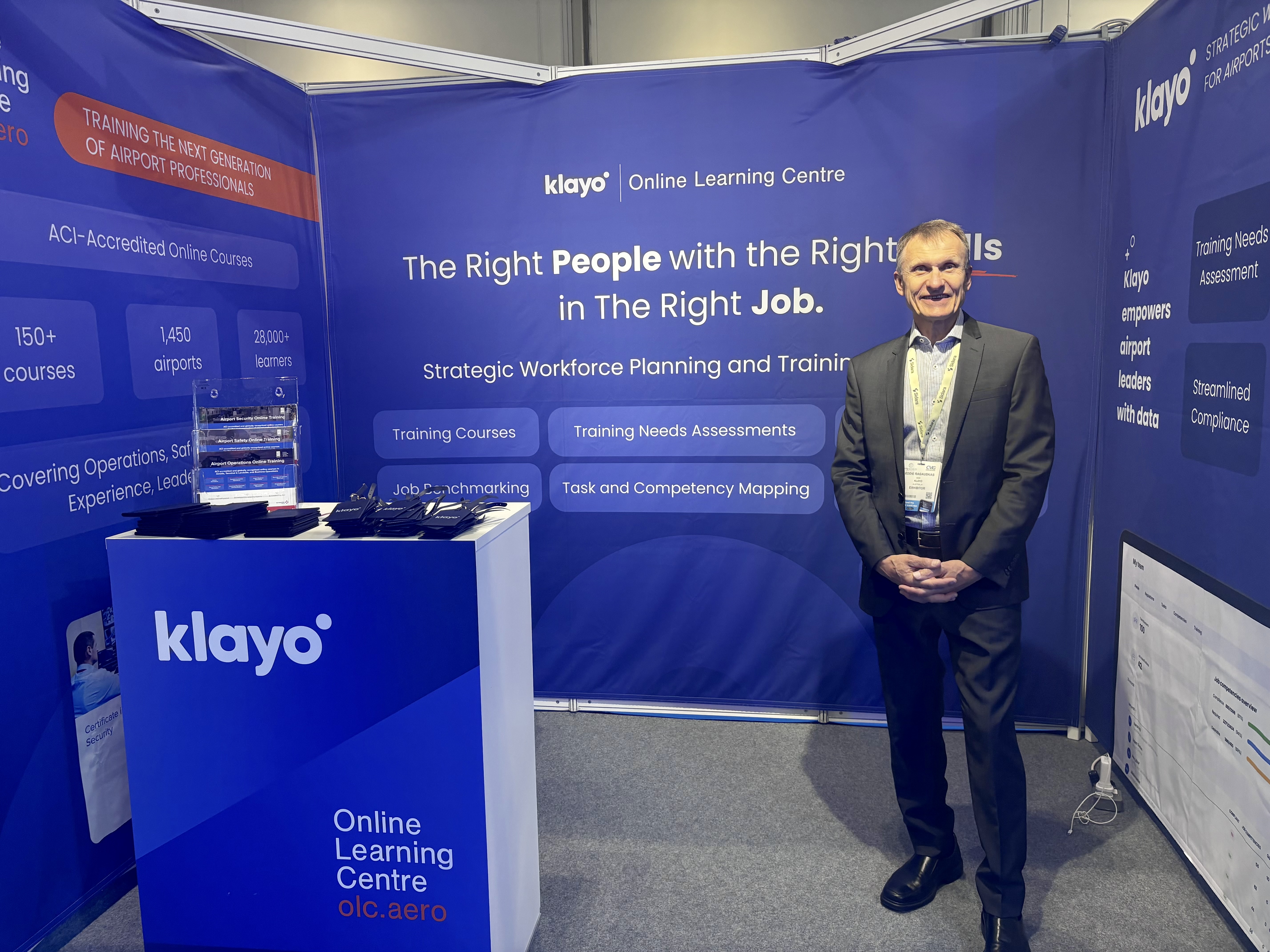
What we talked about at the Klayo stand
We had genuinely exciting conversations at PTE World this year, and a few consistent themes emerged. Many airport leaders told us they lack a consolidated view of their workforce’s skills, qualifications, and compliance status. Information lives in spreadsheets, legacy systems, or departmental silos, making it difficult to make confident decisions at an organizational level. This is where Klayo’s platform adds immediate value, by connecting people, roles, skills, training, and compliance into a single, real-time view.
Internal mobility and cross-functional capability came up just as often, particularly among small and medium-sized airports. When disruption hits, airports that can flex their workforce across functions recover faster and maintain service levels more effectively. Alongside that, there’s a growing appetite for targeted training that closes specific gaps efficiently, rather than generic programs where everyone completes the same course regardless of their actual development needs.
The next generation is ready. Are airports?
One of the highlights for us was meeting organizations and individuals focused on developing the next generation of aviation workers, from training providers and universities to students actively exploring careers in the sector.
But expanding the pipeline isn’t enough if new talent doesn’t find structured development pathways and clear career progression once they arrive. According to IATA, today’s level of workforce turnover in ground handling is not sustainable. And while a recent industry survey found that 74% of aviation workers want to stay in the sector, a quarter are considering leaving, a number too significant to ignore given the cost and length of training pipelines.
You can’t build the airport of the future without a workforce strategy for today
PTE World 2026 made one thing clear: the airport industry is full of ambition and forward momentum. The investments being made in infrastructure, sustainability, and passenger experience are impressive and necessary. But ambition without the people to deliver it is just a plan on paper.
The workforce conversation at PTE World happened in corridors, not on stage. It’s time for that to change. Airports that treat workforce planning as a strategic function, not an afterthought, will be the ones that actually deliver on the promises being made at events like this. And those that invest in visibility, internal mobility, targeted development, and retention today will have the operational resilience to handle whatever comes next.
Want to see how Klayo helps airports connect their people, skills, and compliance into one clear picture? Get in touch to start the conversation